Venice
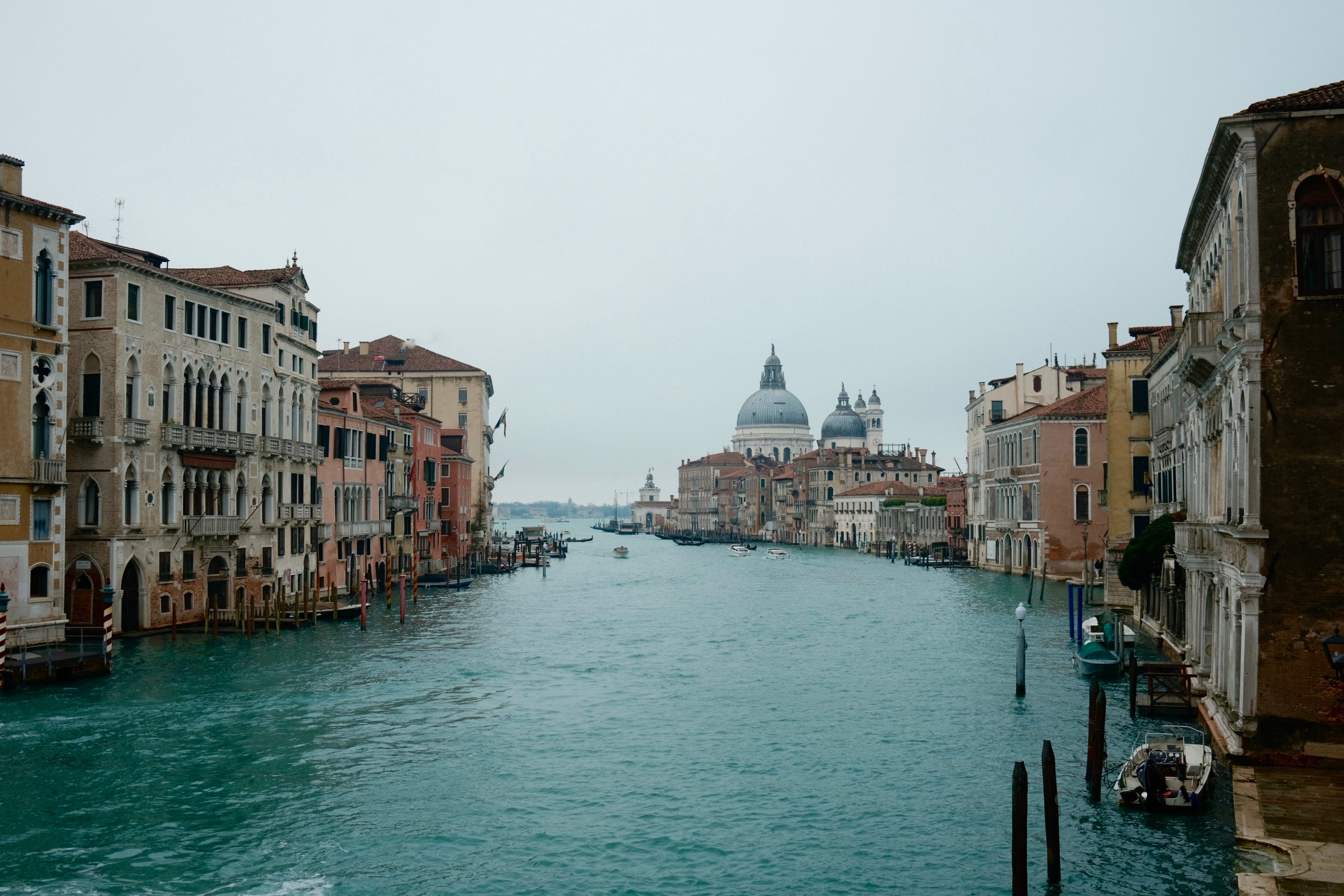
There are not many grassy areas in Venice, just the greens of Castello, on the eastern tip of the islands, where you can walk through botanical gardens, a pine forest, and even shoot hoops on a half court. But that’s a lengthy trek for most tourists, and even locals.
When local kids play, they stick to the back streets or narrow alleyways, where older Venetians can pop out of windows and greet them or scold them if they’re being too loud. Sometimes it’s possible to open one apartment window and extend yourself across an alley into the opposite building, without breaking a sweat or touching the ground. They can be that narrow. I’m sure romances have started or ended like this; a wet-eyed goodbye, a window let up, a leg extending out into the night.
When the tide rises, the streets flood and Venetian children play wearing thick knee-high water boots, if they’re allowed out at all, which depends on their age, their health, and the level of the water. Locals have an app that tells them when flooding will occur. Mold is a constant in most homes. You don’t get around by car, tram, or metro. Some locals have boats, but most walk everywhere or catch the vaporetto, a public water bus, which runs through the Grand Canal and even to neighboring islands like Murano, famous for its glass making, and Lido, famous for the film festival. There’s one road that takes you to the mainland, or what Venetians call terraferma.
The high tourist season is from April until November, and then of course there’s a pick up during Carnival in February. But even in the low season, when I went, gondoliers with a red neckerchief were ushering newlyweds down the canals and dozens of tourists clambered to take selfies up and down the city’s bridges. If you’re in a good mood, you can do what I did, which is just make casual eye contact with strangers on the bridge and within minutes they will ask you if you can take a photo of them. Once one asks, another will ask, creating a domino effect of public service.
Six days a week, trash is picked up by garbage men on foot. Weather permitting, of course. (Everything in Venice is weather permitting.) The garbagemen pull two-wheeled carts from home to home. They take your garbage from you by hand, like how milkmen used to pick up empty milk bottles back in the days of yore.
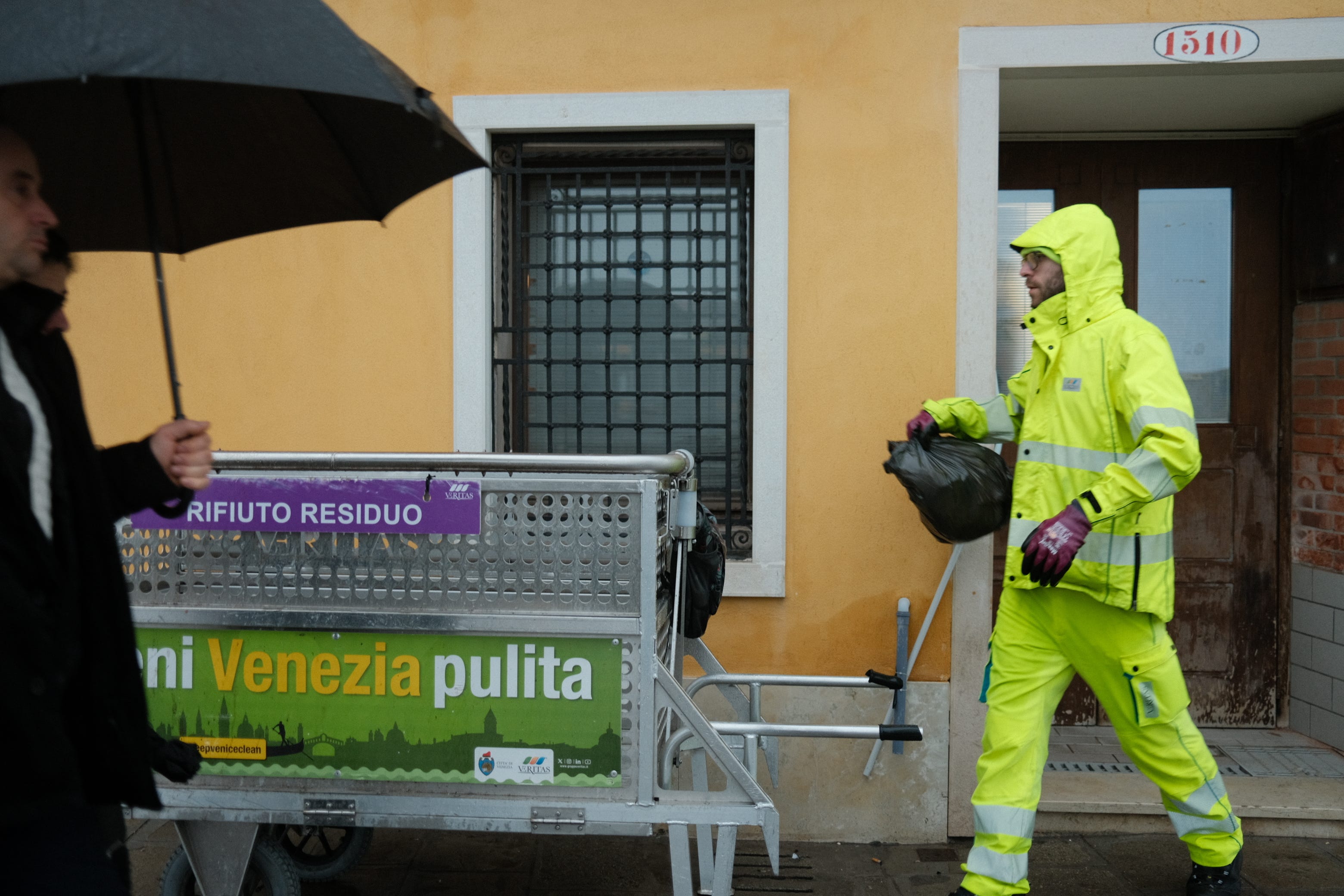
Supplies and goods are delivered to the island by a large flat boat that transports a long-haul semis. Pallets are unloaded by a crane, then the goods are broken down into manageable loads that can be lugged by small carts.
My first little meal—I stuck to little meals the whole weekend, never once sitting down at a restaurant, instead eating on steps, while walking, or leaning over a bridge—was at Bacareto da Lele, where locals linger inside, talking with the staff. These are large, bloated men. Their skin, a diabetic blush with patches of white, like a fist clenched. They wear gold rings that they can no longer take off. The corners of their mouths are always wet.
The spot is only big enough to order and for one small standing table in the corner. They sell little paninis: a slice of meat and cheese or cheese and vegetable. They sell little glasses of wine: The wine list is written in chalk on a blackboard propped up against the bar. Everything here is 2-3 dollars. The kind of place where you wouldn’t be able to pay by card anywhere else in the world, but of course you can in Venice, the city is supported by people who only pay by card.
Most people take their food and drink outside, huddling around a few wine barrels or using the bridge rails as a makeshift table. I’m sure in warmer, drier months people sit on the ground, their backs to the wall. But I’m visiting at the end of January, on a cold rainy weekend. My shoes will get waterlogged and the summer sky blue rain jacket, the one that I’ve had for years, originally picked up from an outdoor goods store in Sofia, when I was getting pelted by their sudden May showers, won’t do much to keep me dry, just like it didn’t do much for me in Thailand, Iceland, or under the waterfalls of Gavarnie, and yet still in my bag of belongings it goes.
Getting to your destination feels like taking a series of detours, like being in a home that’s more hallways than rooms, so there’s plenty of the island where tourists don’t go, where it’s quite empty, even in the high season, quiet residential streets run parallel to well-trodden avenues.
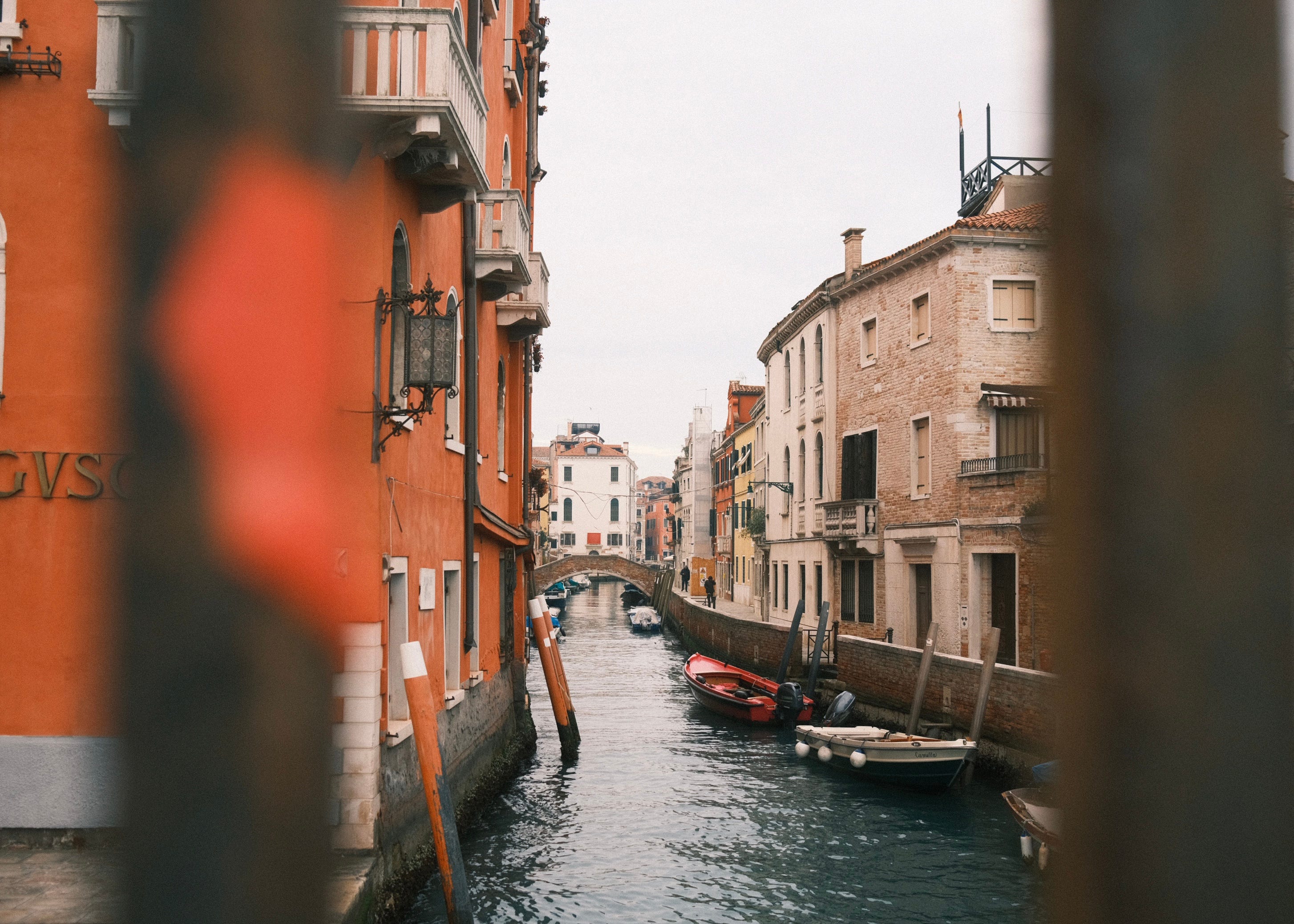
This is true of most cities you visit, and described best by Antal Szerb in his novel Journey By Moonlight, which I re-read leading up to this trip, as it begins with a newly married couple in Venice realizing that they don’t know each other. The novel opens with: “The troubles began in Venice, with the back alleys.” After the husband, Mihály, spends a night out alone on his honeymoon, walking up and down Venice’s back alleys looking for a type of bar he cannot find (it belongs only to his past), he returns to his wife with the sunrise. Erszi, his wife, had been “sick with worry and exhaustion.” Her worry turned to confusion when he came back: why hadn’t he told her he was going to wander the alleys all night? Why do it at all?
His attempts to explain himself to her are futile. “The more he explained the more confusing it became. She had long known that she did not understand him, because Mihály had secrets even from himself. . . And yet they had married because he had decided that they understood each other perfectly, and that, for both, the marriage rested on purely rational foundations and not fleeting passion. For just how long could that fiction be sustained?”
Eventually Mihály flees and the novel follows him on a journey through Italy and into his past life as a wanderer and bohemian. But his travels don’t bring him closure or belonging.
This is how Mihály feels leaving Rome, but he might as well be describing Paris, London, Seoul, Porto, Vienna, or any of the other places I’ve seen.
It was not particular buildings that had found their way into his heart. The overwhelming experience was of the life of the city itself. He wandered aimless and uncertain, with the feeling that tucked away in the city were still thousands upon thousands of districts he would now never see. And again he had the feeling that the really important things were happening elsewhere, where he was not; that he had missed the secret signal.
In Venice these secret signals are so close, you pass by them like ghosts unobserved in the background.
Take for example the residential streets of Santa Croce, where Alexander and his friends play in peace. Here you can find a good bakery full of the kind of grandmothers who swat your hands when you try to help them set the table, and yet from outside the bakery, if you stand on tip toes, you can see Piazzale Roma, one of two places in Venice where cars are allowed, and where tourists like me are dropped off and picked up by crowded, very typically Italian run airport shuttles.
Though I take perhaps dozens of photos for people, both of couples and other solo travelers, I didn’t ask someone to take a photo of me. I came close to asking several times, the request sitting on my tongue.
I could envision the photo of myself that I wanted. I also knew it was unlikely that someone could take the photo of me as I saw it, as I myself could take it. If I could duplicate myself, and have one of me be behind the camera and the other me be in front of it, that would be ideal. A photo of me on the bridge, the city behind me, a little smirk, a close lipped smile. I wouldn’t be quite centered. The photo would look hurried. Something I could send to my parents back home or use perhaps on a dating app or just look at every now and then. But this was not an option, and someone taking a photo of me is someone capturing a version of me which I do not acknowledge or grant the right to exist.
Lately, I’ve been circling around this thought: there are two types of people in the world, those who belong in photos and those who belong behind the camera. When you figure out which one you are, you’ll be much happier if you fall in line.
When Alexander was younger, he rode his tricycle down the narrow alleyways, ringing its bell, a helmet strapped to his head. And like all Venetians, he lost that right when he turned eight. Venice is too small for cyclists. The law says that you can own a bike, of course, but you cannot ride it, nor can you even walk it around the city, unless you’re under the age of 8.
Some own boats, but the old adage—the two best days of a boat owner’s life are when he buys one and then when he sells it—rings true here as well. The cost of a parking space for your boat is likely as much as your monthly rent. There are limited spots, and often it’s easier to buy a boat than to get a spot, as the person selling their boat doesn’t necessarily want to sell their spot, which they know they can rent out. Under the right conditions, when the water level rises, and it’s been raining and storming, boats will sink. It costs thousands to retrieve them, and often the boat owner simply lacks the funds (or motivation) to pay the fees. There are currently at least three sunken boats waiting for their owners to bring them back to the surface.
Alexander swears he saw such a boat when he fell into the canal as a young boy, back when he still had the right to ride a bike through his city, but his mother says the place where he fell doesn’t have boats, and even if it did, he wouldn’t have been able to see his hand in front of his face. He was playing with other children in a skinny alleyway when he burst out to tag a friend, missed, tripped, and silently fell into the cold Venetian waters. When this happens (and it does happen to children and also tourists, young and old alike), it’s more of an emergency than you might think.
First, there’s the obvious risk of drowning. The waters are not always calm. There’s the twice a day tidal cycle. When water comes in from the Adriatic, it pushes down the canals. When the tide goes out, water is pulled back. Then there’s the current made by the consistent movement of boats and gondolas roaming through both the Grand Canal and the smaller side canals. To make matters worse, it isn’t easy to climb out of the canal once you’ve fallen in. There aren’t always steps nearby and rarely ever a ladder. Instead, there are mossy, damp old brick walls, the color and texture of shower drain grime.
But the greater risk is infection. The canal water is not clean. It’s glossy teal— like the color of toilet water when you use cleaning bleach tablets under the seat that activate when you flush— is deceiving. This is not a new issue. Centuries ago, locals would simply throw their waste into the canals via the gatoli (underground tunnels). Heavier waste would sink to the bottom of the canal while the lighter waste, due to the twice-a-day tidal cycle, would be effectively carried out to sea. Much of Venice still relies on that system, while aiding it with septic tanks which treat liquid before it’s deposited into the canals while boats called “honeysuckers” remove solid waste from the tanks. Still, waste in the water is such a prevalent issue that Venice remains one of the best places in the world for scientists to study what happens to fecal bacteria in aquatic systems.
When Alexander fell in, his friends called out, their cries echoing down the canals, which both carried their fear and obfuscated its source. When an adult found them, he was given a rope and climbed out. His mother took him to the hospital, where he was cleansed and checked for any cuts or wounds. He swore on his life that he did not swallow any water. He did not even yell or cry as he fell in, he said. He was monitored for weeks and given multiple tests to check for Hepatitis A and the like.
Though he was born in Venice, a modern-day Venetian, which is a rare feat (fewer than 400 kids a year are born on the islands), Alexander is not Italian, but Russian, like his mother and father. His mother, who is my tour guide, showing me what it’s like to live in Venice, knows what an oddity they had made. “This is normal for him,” she says, waving towards nothing in particular, but signaling this city of canals and alleyways, of tourists queued to take photos of his hometown, any ol’ part of it, of gondoliers ushering newlyweds under bridges, a city with a woman’s prison but no cars, a city where a child can trip into the canal and swear he spotted a sunken boat and be checked for Hepatitis in Year of Our Lord, 2026; a city where he’s more accustomed to hearing about funerals than birthdays.
“I’m from a small city in the south of Russia, yes. But even a small city is more of a city than Venice. Venice is a small fisherman’s town, an amusement park, a coastal retreat, a museum gift shop, a landmark, and a mausoleum all rolled into one. I’ve lived in Saint Petersburg, Glasgow, Torino, and Toulouse. I know what I’m missing by living here. The convenience of having a car, a bus stop, a metro, a tram. The abundance of options from other cities. Something to do on a Friday night. Having a favorite book shop, not just a book shop. I miss local breweries. My son has yet to know a home that isn’t plagued by mold. My son does not yet know it isn’t normal to be sinking, to plan your day around tidal changes. Have you visited a grocery store yet? I encourage you to. Everything here requires intentional thought before making a decision. You don’t just buy a new piece of furniture. Think of the cost of getting it here, the logistics. Of course, he’s been to Mestre. We take him sometimes, crossing the bridge by shuttle to then pick up our car on the mainland, where we rent a spot, as it’s cheaper. We visit or stock up on supplies, and when we do, his eyes are wide. Everywhere he goes, he will marvel at other ways of living, remembering how he used to live here.”
In Italo Calvino’s novel Invisible Cities, Kublai Khan, “emperor of the Tartars,” gets long reports of cities from his envoys. “Only through foreign eyes and ears could the empire manifest its existence to Kublai.” The stories he likes best are from Marco Polo, the young Venetian explorer, who at first can’t even speak the emperor’s language, instead describing the cities he’s seen with “gestures, leaps, cries of wonder and of horror, animal barkings or hootings, or with objects he took from his knapsacks—ostrich plumes, peashooters, quartzes—which he arranged in front of him like chessmen.”
As he learns the emperor’s language, Marco Polo describes cities with names like Isadora, Zemrude, and Fedora. Fedora is described as a grey stone metropolis where, in the centre, “stands a metal building with a crystal globe in every building.” Isaura is a city with a thousand wells with two forms of religion.
About halfway through the novel, Kublai Khan points out that Marco Polo has told him of many cities, but has never spoken of the one from which he was born and raised, Venice. To which Marco Polo replies, “Every time I describe a city I am saying something about Venice.”
That’s who she is raising, I told her, another Marco Polo.
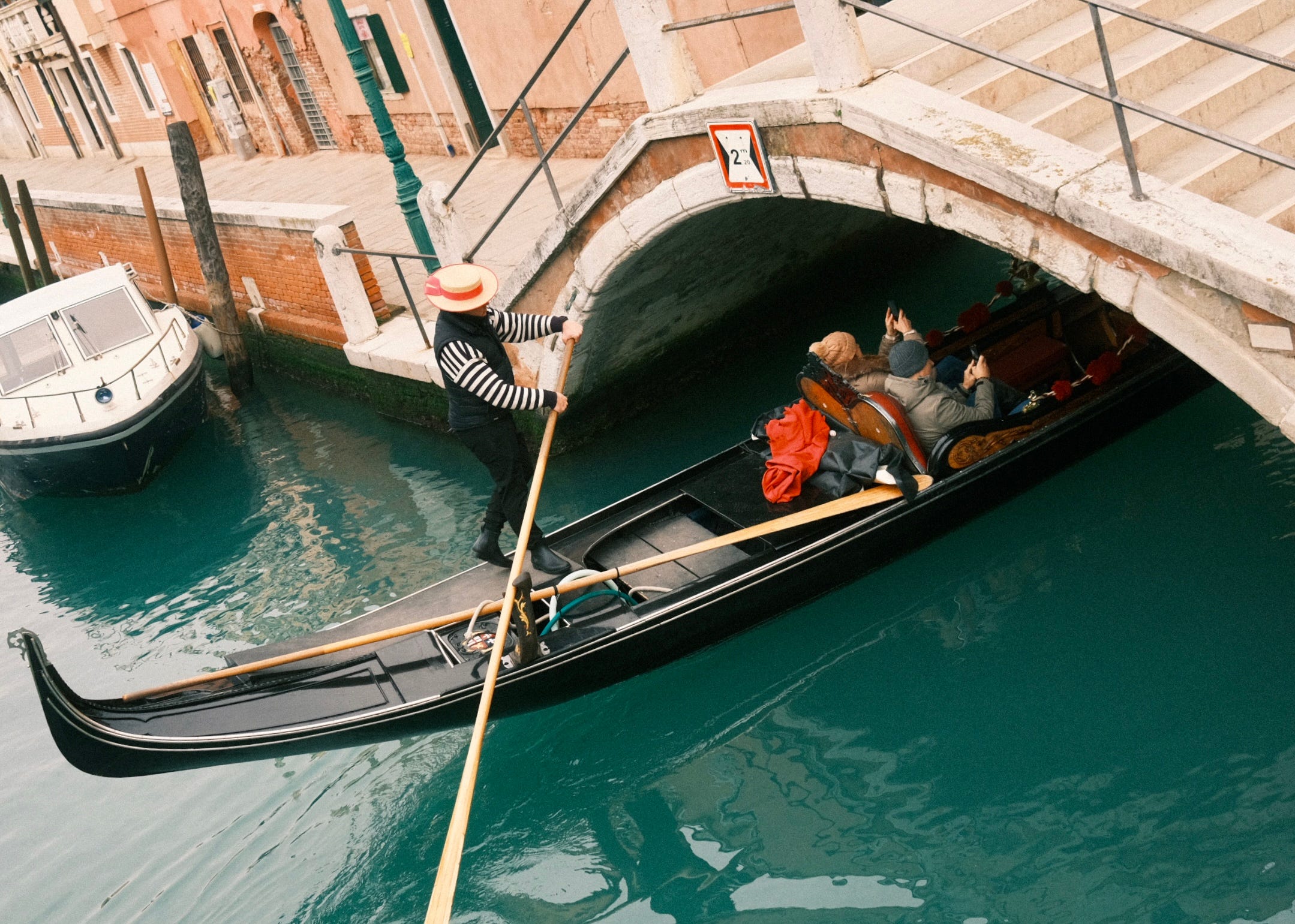
I’m in Venice in part because I wanted to take photos of the canals filled with winter fog, but I learned on my second day from Alexander’s mother that there won’t be any fog this weekend or in the coming weeks. She told me to come back in early December, not just to see the fog, but also to experience Venice at its most empty, and I plan to do so.
Even though it’s cloudy and rainy during my short trip, the city still bursts in pink, yellow, greens, and blues. I’m traveling, like usual, with my camera, a Fuji x100v, which I had picked up on a whim years ago when staying in Porto. So many things that I own I accumulated from different cities in my travels.
The Fuji X series is popular for its film simulations.
You can re-create popular film stock, like Kodak Portra 800, Kodak 200, CineStills 800T, etc, which allows you to take film-esque photos without dealing with the cons of film (expensive to buy and develop and it takes a lot of shots to get one good one).
For example, here are two photos of a crane in Venice, taken seconds apart, with the same camera, just a different film simulation applied.


The “real” Venice, or the Venice I saw with my own eyes, cannot be captured by my cameras, not the Fuji X100V, not my iPhone 17, not my Olympus XA, a true-blue film camera I loaded up with Portra 800, a roll that’s still waiting to be developed. But I know that even amongst the roll of film I’ll just be looking at another version of a not real (but this doesn’t mean not true) place. The Venice I saw with my naked eye sits somewhere between those two photos above, both darker and more subdued than the first and more vibrant and colorful than the second.
The Generator Hostel, where I’m staying, is not technically on Venice, but on Giudecca, “a quiet and local area,” a 2-4 minute boat ride away from Venice. You can get a weekend pass for the Vaporetto, which is cheaper than paying individual tickets, but you have to validate your little paper pass every time you get on, which is fine except the pass is paper and it’s been a rainy weekend. Mine is on the edge of tearing, its texture like a receipt you accidentally washed. Validating the pass is like trying to have sex when flaccid. I’m worried that it’ll tear or the validators will stop reading it, and I’ll have to buy a new one. I keep it stored between my d’Orsay pass and travel credit card to help it keep its shape. It just has to work one more time.
Giudecca used to be the industrial part of Venice. The small island sliver had shipyards, chemical plants, weaving factories, breweries, and more. Now there’s only one factory in operation: it makes expensive textiles for theatre and film.
Staying on Giudecca reminds me of my time on Gaia in Portugal. That was years ago now, long before Paris, back before I had started to think of slowing down my travels. When you stay in Gaia, you’re not staying in Porto, but because of this small sacrifice you get to see Porto fully, as an outsider. In those winter mornings, I walked along the River Douro, Porto to my left.
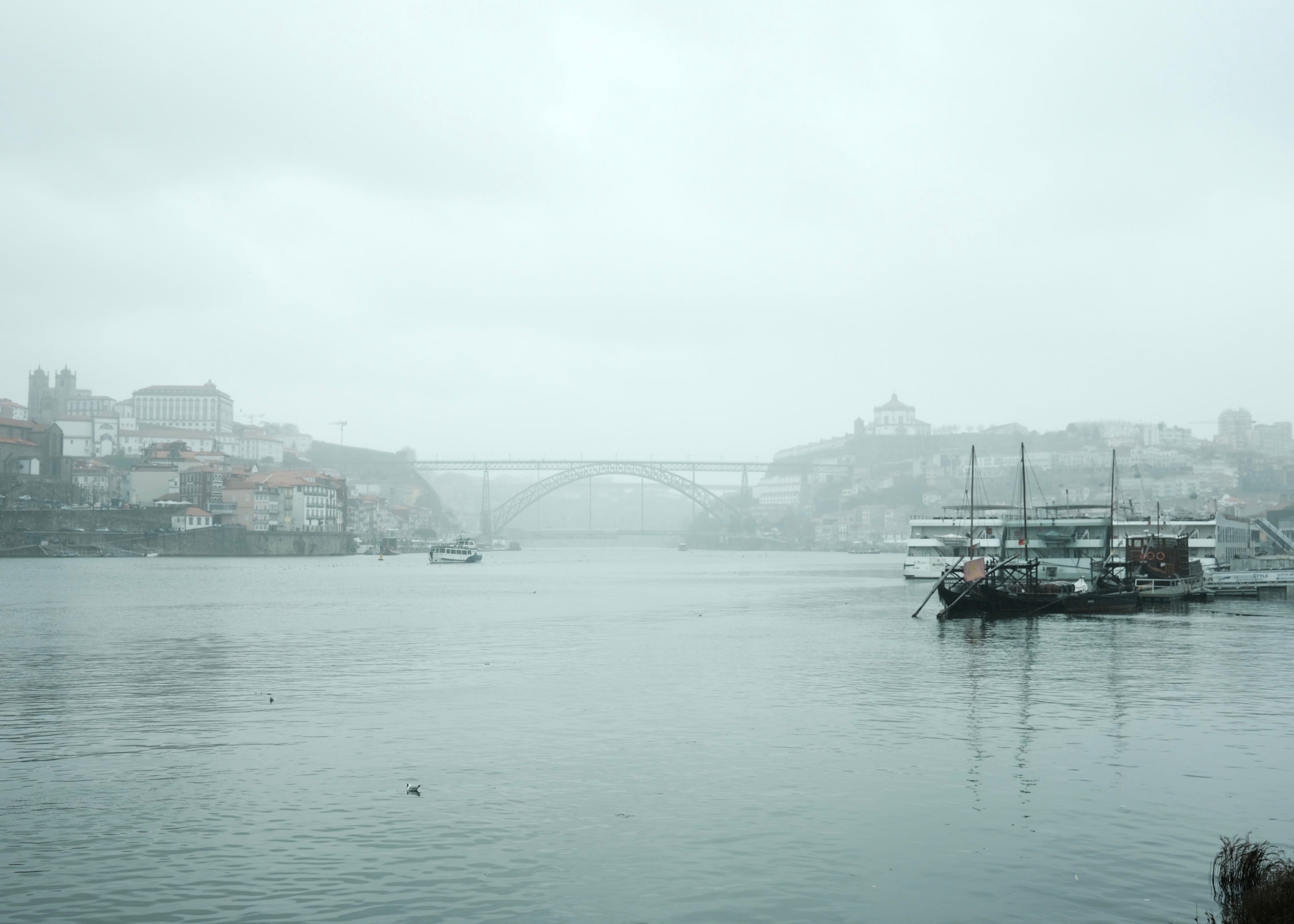
So it was with Giudecca. One of my favorite things about Venice was arriving. I took the vaporetto from Giudecca morning, afternoon, and night. Even when it was raining, and it was nearly always raining, I stayed on the deck. I’m George Washington crossing the Delaware. I’m Magellan circumnavigating the globe.
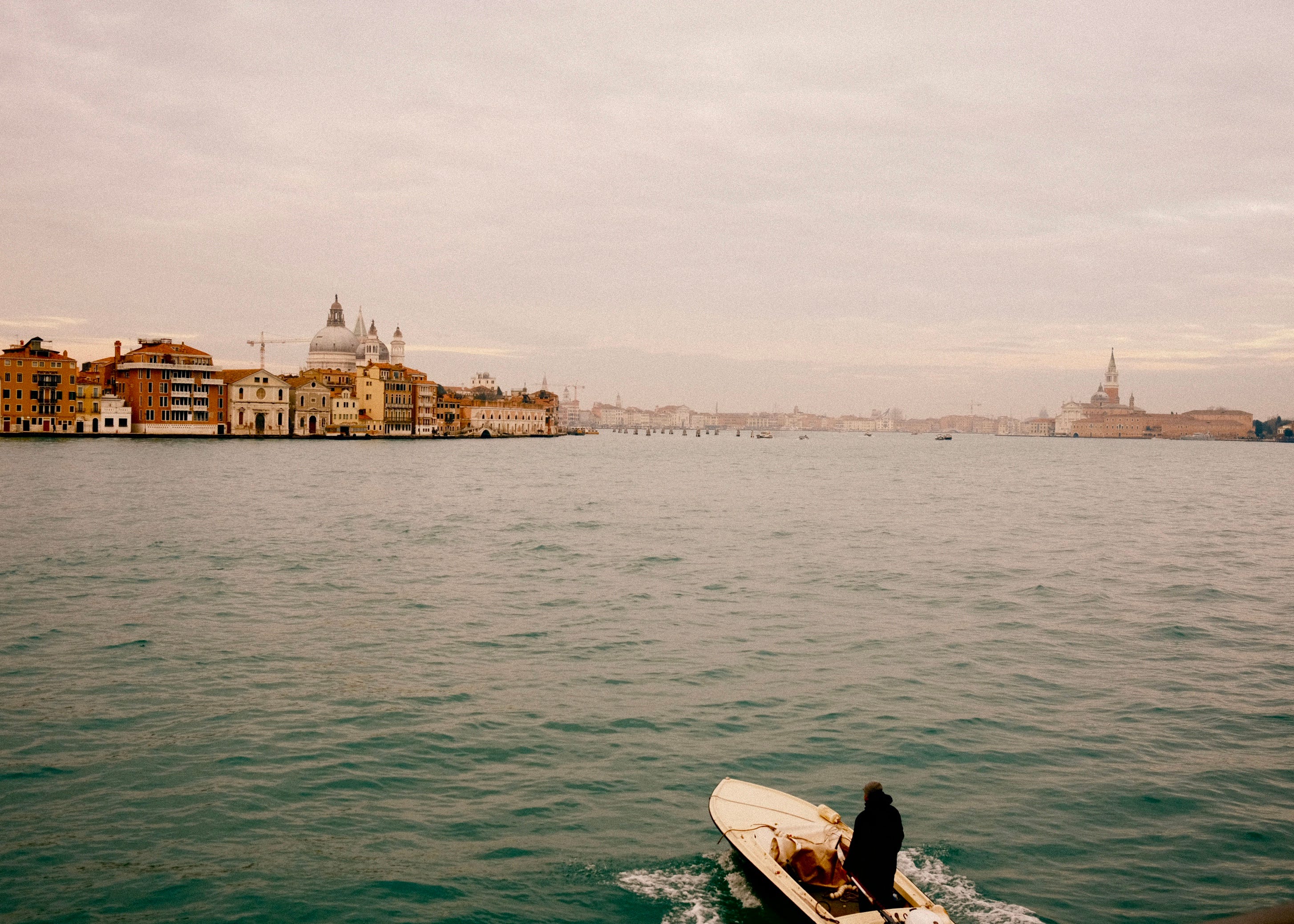
When Calvino’s Marco Polo told the emperor that when he described any city, he was describing Venice, that doesn’t mean that Venice was the benchmark for him—that when he saw a city, he compared it against his hometown—but rather by visiting new cities, he came to better understand where he originated from.
As Marco Polo tells the emperor, “the more one was lost in unfamiliar quarters of distant cities, the more one understood the other cities he had crossed to arrive there; and he retraced the stages of his journeys, and he came to know the port from which he had set sail, and the familiar places of his youth, and the surroundings of home, and a little square of Venice where he gamboled as a child.”
When I lived more nomadically, changing countries every month or two, I often thought of that passage.
Per its logic, I understood Belgrade more when I left it for Sofia, and I only began to understand Sofia when I moved to Leipzig and spent my evenings walking down the Karl Heine Pathway, and I didn’t understand Leipzig until I drunkenly navigated the Seoul metro. This rings true to me, and its truth can be applied to other aspects of life, like relationships. I understand more clearly now my first love after living through all the other loves that followed.
And when I told friends and family about those cities I visited, about Belgrade, Sofia, Bucharest, Seoul, Porto, Krakow (and more) I was really describing Mesa, my hometown, with its long hot summers that stretch into November and now even December; with its wide roads; its John Wayne palette; its August monsoon season where wind snaps trees in two; with stretches of concrete and harsh sunlight reflected in glass city buildings; where everyone golfs; where adults wear pajamas and crocs to get a large iced coffee at 8am; where I used to think that I’d one day be buried but now I’m not so sure.
I’m currently slouched on a twin-size bed in a stuffy mixed dorm, my thin hostel pillow rolled up to provide meager neck support as I write on my phone. My mind is dislodged, wobbling the way it does after a few drinks. After the Finn left me for a more fun group, I kept drinking spritz after spritz, hoping that if I got drunk enough I’d be able to sleep in this hot shared room.
It’s my last night in Venice. My last night sharing this space with four strangers, all women, three young, one old: the Asian, the Child, the Ballerina, and the Ukrainian. There are 3 sets of bunk beds on the left side of the room and one stand-alone bed on the right. I’ve been assigned the middle bottom bunk on the left, right underneath the Asian, between the Child and the Ballerina. The Ukrainian is alone on a single bed along the right wall. She’s been here longer than all of us, going on two weeks.
I’ve dimmed the light on my screen so as not to bother the others (courteous and gentlemanly). These bunks don’t have curtains. During the day, we make awkward eye contact as we come and go. At night, we can see just the outlines of each other or our faces lit by screens. I’m not listening to music, but my AirPods are in just in case my phone makes any unexpected noise, like when you open Instagram and a reel blasts (courteous and gentlemanly x2).
The Asian isn’t sleeping well. She’s a-tossing and a-turning. I can picture her clearly doing so, as she’s the one who, other than the Ukrainian, I’ve seen the most. She has an oval face; long, dark straight black hair; flat feet that struggle to get up and down the four-rung bunk bed ladder. Sometimes she just jumps, landing with a thud and a smile. When she goes to bed, she wears a nightgown that’s tight at the chest and waist but opens up like a short skirt, the kind that would ruffle in a breeze, if there was ever anything besides stale air in this room. When she tosses and turns, our whole bed unit shakes.
I need to go to bed.
The Child is fast asleep. Lucky little shit. She sleeps with her knees bent up. I’ve never seen that before. It looks like she’s lying on a yoga mat in between poses. Later, when I wake up in the middle of the night—I never get more than a few hours of sleep in a row in hostels—I will see that her knees are still pent up. She talks in her sleep and sleeps with a stuffed animal. I think it’s Stitch from Lilo and Stitch.
To my right, the Ballerina is also sleeping, or if not sleeping, then just staring at the wall, no phone, nothing. I still haven’t seen her face but I’m convinced I could pick her headshot out of a portfolio, as if all of her separate body parts that I have seen (her bulging wrists, her taut back stretched over sharp bone, her flipper feet, her doorknob ankles) could add up to only one final missing piece: a high forehead, a beak nose, thin lips, a square jaw, sharp cheekbones, and anxious eyes.
Across the room, the Ukrainian munches loudly on brittle chips and watches YouTube or reels, her screen’s luminosity set to full moon on a clear night. Once again she’s fallen into the trap of thinking just because she can’t hear us (she is always wearing thick noise-canceling headphones) that we can’t hear her. Every few minutes she wipes her forearm aggressively across the thin, rough hostel sheets to get the crumbs out. She’s older than I am, or if not, then she’s lived a much harder life (almost guaranteed) and never saw value in applying sunscreen. We’re the elders of the room, the mother and father, though we’re clearly divorced and not on speaking terms. She’s left the tending of the children to me while she bunks up alone against the right wall, where there’s only one bed, her bed. She doesn’t use her assigned locker for anything. Instead, she lines up her toiletries, snacks, and luggage along the baseboards. She dresses like someone who re-uses tea bags. She’s also taken control of the two windows on that wall. She hangs her wet clothes and towels out the open windows during the day and closes them at night, which I hate. It’d be one of the many things we’d fight about if we were still married. Closed windows make the already warm room (you can’t turn off the heater) hotter.
I can’t sleep in this heat, and the alcohol isn’t helping, but it’s almost over. In a few hours it’ll be time to wake up and start the long procession home.
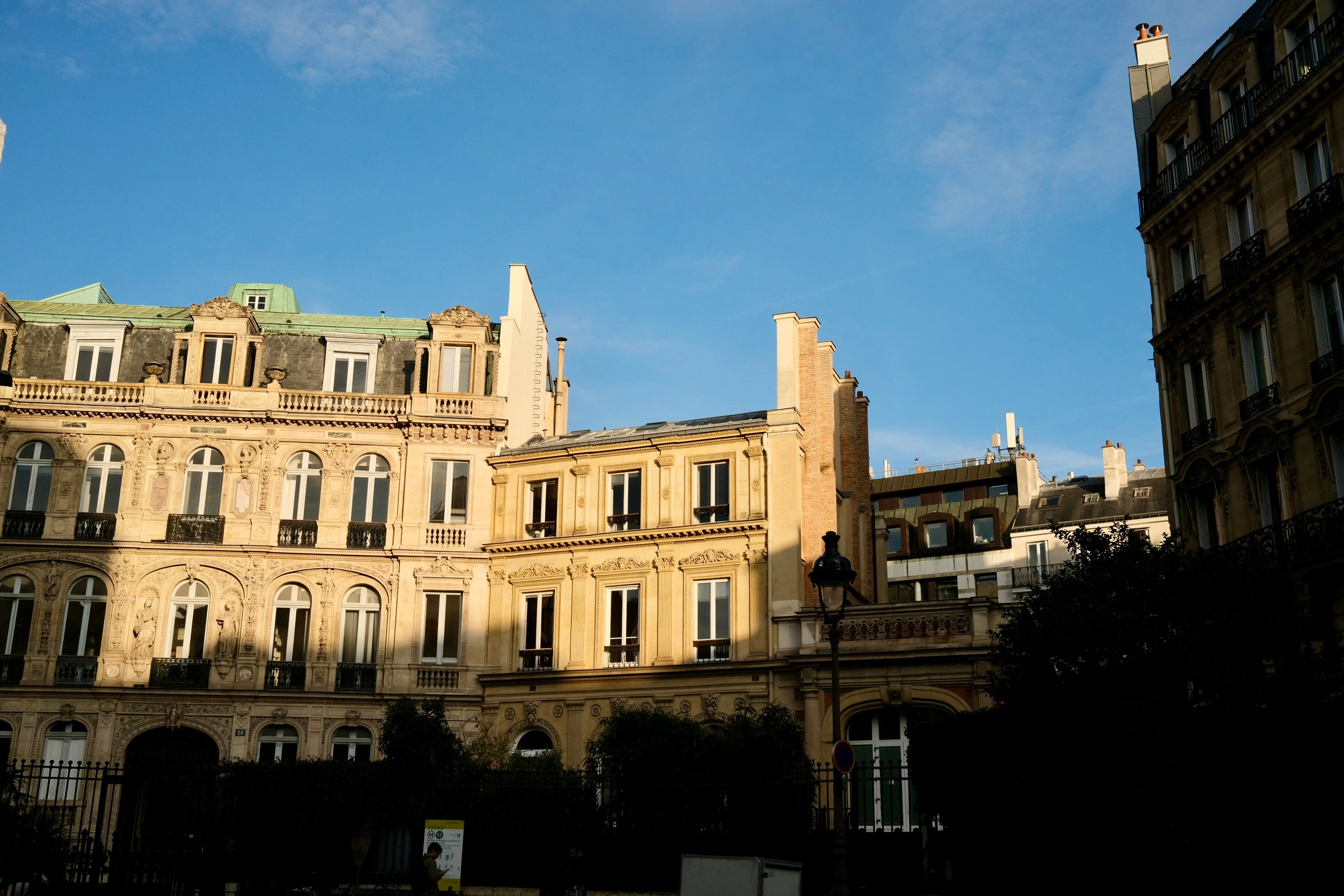
First I’ll take the vaporetto from Zitelle to San Zaccaria, then walk one last time through the canals—when planning a Venetian trip, one must schedule in time for wandering—then take the ATVO shuttle bus from Piazzale Roma to Treviso airport where I’ll board a plane for Beauvais, where I’ll get on another airport shuttle bus, this time from Beauvais to Porte Maillot, because my plane will be delayed and I’ll miss the shuttle to La Villette, and then from there I’ll take line 1 to Hotel De Ville, then transfer to line 11 and take that to Goncourt, where I’ll walk up the long stairs of exit 1, and then down rue du Temple, where I’ll take a right on rue Bichat. My apartment building sits between a “Cambodian” restaurant and a small independent theatre. I go through two locked doors, each with a separate six-digit code, up six flights of stairs, to a door with no knob, just a keyhole. I live between walls that don’t keep out the cold, the heat, or noise. There I’ll strip out of my travel clothes, throw them into the washer, then scrub the weekend off of me in a shower I can barely turn around in. As I’m drying, a towel wrapped around my waist, I’ll take anti-bacterial hand wipes to my phone, AirPods, camera, etc. I like this procession of travel, these moving parts, connections and transfers, the cleansing. I’m an astronaut hurtling back down to earth, my bones remembering the weight of gravity. I’m a deep-sea diver breathing out slowly as I ascend; go too fast, and you can get the bends. Every time I get on one vehicle (boat, bus, train, plane) or every time I go through a door, I leave behind a bit of myself, that travel self, Venetian David, and replace it with the moods and colors of my destination. Bit by bit, I leave behind all that I had picked up in Venice, and re-pick up all that I had left behind in Paris, though things will look and feel a little different, won’t they?